Generative Engine Optimisation (GEO) & AI Brand Mentions: The Complete Guide
Introduction
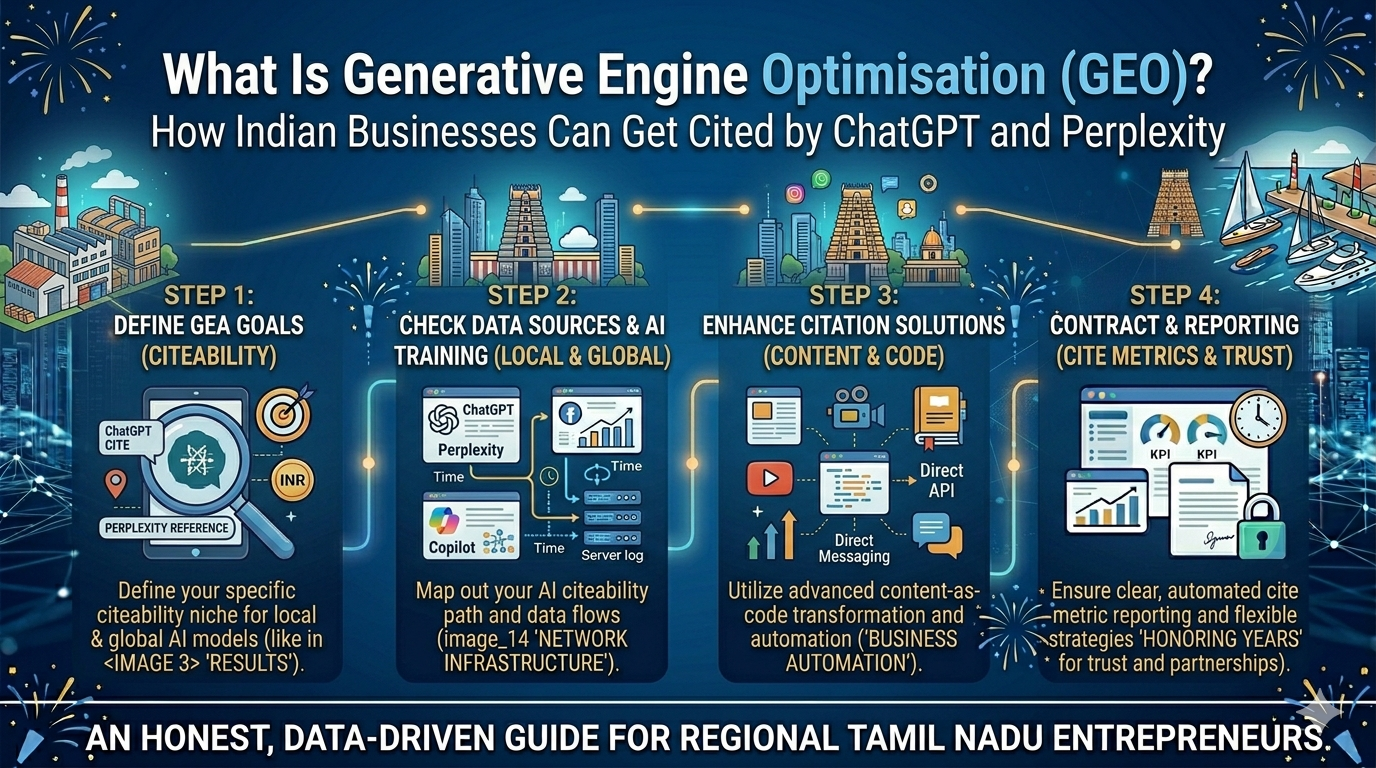
Search and discovery are changing. People no longer scroll through links — they ask large language models like ChatGPT, Gemini, and Perplexity for instant answers, summaries, and recommendations. In this AI‑driven environment, Generative Engine Optimisation (GEO) has emerged as the strategy that helps brands be seen, understood, and mentioned in those generative responses. Traditional SEO focuses on rankings on search engine result pages, but GEO focuses on becoming part of the AI narrative itself so that generative answers include your brand’s name, authority, and context.
What Is Generative Engine Optimisation
Generative Engine Optimisation is the practice of optimizing digital content so that generative AI systems interpret it accurately, understand context, and reference your brand when generating answers to user queries. Unlike traditional SEO, which primarily aims to improve rankings on search engine pages, GEO is about ensuring AI models include your content in their answers by building strong semantic signals, structured data, and credible entity information that AI can pull from. https://arxiv.org/abs/2509.08919
Why GEO Matters Now
As AI becomes the first point of research for many users, visibility is shifting from search results to AI‑generated recommendations and summaries. Brands that are cited in these responses gain instant credibility and authority, influencing user decisions even without a click. Being referenced within AI answers positions your brand as a trusted source and creates new opportunities for discovery, engagement, and lead generation. https://arxiv.org/abs/2601.16858?utm_source=
Traditional SEO alone is insufficient in this new era. AI models do not just tally keywords — they interpret meaning, context, and credibility. GEO fills the gap by ensuring that your information is structured, contextually relevant, and accessible to generative systems, which improves the likelihood of being cited in real‑time responses.
Understanding AI Search Intent
Before optimizing for GEO, it’s important to understand how users interact with AI search systems:
- Informational Intent: Users want clear explanations (e.g., “What is GEO?”).
- Commercial Intent: Users compare brands or solutions using AI.
- Navigational/Discovery Intent: Users explore brands through AI recommendations.
GEO content is written to satisfy how AI interprets intent, ensuring answers include your brand accurately and meaningfully. https://arxiv.org/abs/2509.08919?utm_source=
Core Concepts Behind GEO
At its heart, GEO revolves around four pillars:
Entity Optimization and Clarity
AI systems prefer clear, named entities — brands, people, tools, and products — that are consistently referenced and defined. To boost your chances of being cited, ensure your brand is described using precise language and structured data.
Structured, AI‑Friendly Content
AI engines favor content that is well‑organized, direct, and easy to interpret. Use clear headings, natural language answers, lists, and synoptic formats that reflect how users ask questions.
Credible Sources and Mentions
GEO depends on how often your brand is mentioned across high‑authority sites, forums, press releases, and industry content because these mentions build trustworthiness signals that AI models can rely on.
Semantic Relevance
AI systems focus on context and semantic relationships. They connect topics, entities, and concepts, not just keywords. GEO content should help AI understand how your brand fits into broader contexts and answers.
How GEO Works
When a user asks an AI system a question, the model generates an answer by:
- Identifying relevant sources that contain credible, structured data.
- Evaluating contextual relevance and entity authority.
- Synthesizing a response that often cites multiple trusted sources.
- Including brand mentions when it finds informative content with strong signals.
GEO influences this process by ensuring your brand’s content is present where AI looks for reliable context — including structured pages, authoritative mentions, and semantic clarity — increasing the chance of being quoted or recommended.
GEO vs Traditional SEO
Although GEO and traditional SEO share principles, there are important differences:
- Traditional SEO focuses on ranking links in search engine results.
- GEO focuses on being cited inside generative responses where users get answers directly.
SEO still matters as a foundation, but GEO is about structuring, contextualizing, and empowering your content so that AI systems can reference it meaningfully, not just list it in results.
Practical GEO Strategies
- Create Clear Entity Pages: Define your brand, products, and offerings with clarity.
- Answer Relevant Questions: Structure content to answer user queries in conversational formats.
- Use Schema and Structured Data: Help AI parse and interpret your information.
- Earn Mentions and Citations: Get featured in industry publications, news sites, and forums.
- Monitor AI Mentions: Use tools to track how often your brand appears in AI outputs.
Internal & External Linking
In GEO, linking reinforces context and credibility: internal links help establish topic authority, while external links to reputable sources back up claims and create reliable evidence that AI models favor. This strengthens the likelihood that AI systems will cite your content as part of an answer. https://arxiv.org/abs/2509.05607?utm_source=
Images & Media for GEO
Include visuals like diagrams showing how AI interprets information or how content is structured for generative systems. Ensure ALT text describes the entity and topic clearly, such as “GEO brand mention strategy flowchart.” Optimized images support clarity, accessibility, and contextual interpretation by both humans and AI.
Indexing & Submission
While lunching content for GEO doesn’t replace being discoverable, it’s still important to submit your content to indexing tools such as Google Search Console and Bing Webmaster Tools. Proper indexing ensures that AI systems have access to your latest authoritative content and can incorporate it into their training sets and response generation.
Conclusion
Generative Engine Optimisation isn’t just a marketing trend — it’s a necessary adaptation to how users discover and interact with information in the AI era. By focusing on structuring content for AI comprehension, building entity authority, earning trusted mentions, and optimizing semantically rich content, brands can increase their chances of being included in generative AI responses, gaining visibility, credibility, and influence.
Call to Action
Begin implementing GEO strategies today. Conduct an audit of your content, improve entity clarity and structured data, and seek authoritative mentions across the web. By doing so, you give your brand the best chance of being part of the answer’s users rely on.
.webp)
.webp)
.webp)
.webp)
.webp)
.webp)
.webp)
.webp)

.webp)
.webp)
.webp)
.webp)
.webp)