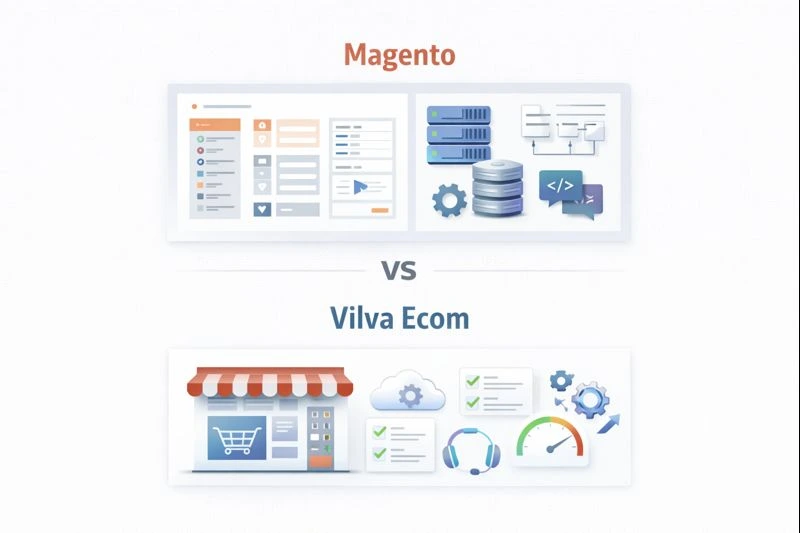
WooCommerce vs Vilva Ecom: A Strategic E-Commerce Comparison for IT Companies in 2026
Introduction: Why E-Commerce Platform Strategy Matters in 2026
As we approach 2026, e-commerce platforms are no longer just tools for selling products online. For IT companies, they have evolved into strategic growth infrastructure, enabling automation, scalability, analytics-driven decision-making, and long-term digital transformation.
With increasing demand for faster deployments, integrated marketing, and predictable operations, choosing the right e-commerce platform has become a business-critical decision. Among the most widely discussed platforms today are WooCommerce and Vilva Ecom.
To evaluate which platform better supports modern e-commerce strategies, it is important to first understand how WooCommerce and Vilva Ecom are fundamentally designed.
Understanding the Platforms: WooCommerce and Vilva Ecom
Before comparing capabilities and strategies, it is essential to examine the core philosophy behind each platform.
Which is Woo Commerce?
WooCommerce is an open-source e-commerce plugin built on WordPress. It enables businesses to transform a WordPress website into a fully functional online store and is widely adopted due to its flexibility and familiarity.
WooCommerce is especially popular for content-driven websites, blogs, and small to mid-sized stores. Its vast ecosystem of plugins and themes allows businesses to extend functionality for payments, shipping, SEO, and marketing.
However, WooCommerce relies heavily on third-party plugins, hosting quality, and continuous technical management. As stores scale, this dependency can introduce performance issues and higher maintenance effort.
What is Vilva ECom?
While WooCommerce builds on the flexibility of the WordPress ecosystem, Vilva Ecom approaches e-commerce from a more managed, growth-oriented SaaS perspective.
Vilva Ecom is a cloud-hosted platform within the Vilva Business ecosystem, designed to deliver an all-in-one e-commerce experience. It includes built-in tools for product management, payments, analytics, marketing automation, and security—accessible through a unified dashboard.
Once the core nature of both platforms is clear, the next critical factor to evaluate is how easily they can be set up and deployed.
Ease of Setup and Configuration: Control vs Speed
The ease of setup directly impacts time-to-market, especially for IT companies delivering client projects.
WooCommerce requires WordPress installation, hosting configuration, theme setup, plugin installation, and security optimization. While flexible, this process often demands technical expertise and ongoing maintenance.
In contrast, Vilva Ecom is fully cloud-hosted and managed. There is no server setup, no plugin dependency, and no manual updates. Businesses can focus immediately on configuring products, branding, and sales strategies.
After deployment, however, the effectiveness of an e-commerce platform is defined by the features it offers and how well those features support daily operations.
Feature Capabilities: Plugin-Driven vs Built-In Strategy
WooCommerce provides essential e-commerce functionality, but advanced features such as marketing automation, analytics, SEO optimization, and abandoned cart recovery typically require plugins. This modular approach offers flexibility but increases dependency on external tools.
Vilva Ecom follows a built-in feature strategy. Core capabilities—including SEO tools, analytics dashboards, automation workflows, and marketing integrations—are included by default. This reduces operational complexity and ensures smoother performance.
However, features alone do not determine long-term success—flexibility and adaptability are equally important.
Customization and Flexibility: Creative Freedom vs Structured Growth
WooCommerce excels in customization. Developers can modify themes, install custom plugins, and create highly personalized content-driven experiences. This makes it ideal for brands where storytelling and design freedom are priorities.
At the same time, extensive customization can introduce plugin conflicts and performance challenges as stores grow.
Vilva Ecom offers controlled flexibility, focusing on configuration rather than deep code-level customization. Businesses can customize layouts, SEO settings, promotions, and workflows while maintaining platform stability.
As customization increases, seamless integration with external tools becomes essential.
Integration Ecosystem: Plugin Networks vs Unified Systems
WooCommerce integrates with a wide range of third-party tools through plugins, including CRMs, ERPs, payment gateways, and logistics providers. While powerful, managing plugin compatibility and updates can become increasingly complex.
Vilva Ecom minimizes this complexity by offering native integrations. Payments, shipping, analytics, and marketing tools are integrated directly into the platform, creating a unified ecosystem.
With multiple systems and integrations working together, security and ongoing maintenance become crucial.
Security, Updates, and Maintenance
WooCommerce places responsibility for security on the business or IT team. Updates, backups, plugin vulnerabilities, and hosting security must be actively managed, increasing operational risk.
Vilva Ecom follows a managed security model. Platform updates, security patches, SSL certificates, and backups are handled automatically, allowing IT teams to focus on growth rather than maintenance.
Beyond security, performance and scalability determine whether a platform can sustain long-term growth.
Performance and Scalability in 2026
WooCommerce performance depends heavily on hosting quality, caching strategies, and plugin optimization. While it can scale, maintaining performance requires continuous tuning.
Vilva Ecom is cloud-native and designed for automatic scalability. It handles traffic spikes, seasonal demand, and growth phases without manual intervention, ensuring consistent performance.
Performance and scalability are closely tied to cost, making pricing strategy an important consideration.
Cost Strategy: Variable Expenses vs Predictable Planning
WooCommerce itself is free, but costs accumulate through hosting, premium plugins, security tools, and maintenance resources. These variable expenses can complicate long-term budgeting.
Vilva Ecom uses a subscription-based pricing model that includes hosting, security, updates, analytics, and support. This predictable pricing enables smarter financial planning and reduces unexpected costs.
These cost and scalability considerations strongly influence how IT companies are expected to adopt these platforms by 2026.
How IT Companies Will Use WooCommerce and Vilva Ecom in 2026
By 2026, WooCommerce will continue to be used by IT companies delivering content-focused and WordPress-based e-commerce solutions, where customization and design flexibility are essential.
Vilva Ecom will increasingly be adopted by IT companies focusing on managed e-commerce services, faster deployments, and scalable client solutions—allowing them to reduce operational overhead and increase profitability.
With future usage patterns in mind, the strategic differences between WooCommerce and Vilva Ecom become increasingly clear.
Final Verdict: WooCommerce vs Vilva Ecom
WooCommerce offers flexibility and creative freedom, making it suitable for content-driven stores and custom WordPress ecosystems.
Vilva Ecom delivers a business-centric, growth-optimized SaaS platform, designed for speed, stability, and long-term scalability.
Ultimately, selecting the right platform is less about technical preference and more about long-term business alignment.
Conclusion: Choosing the Right Platform for the Future
In 2026, the decision between WooCommerce and Vilva Ecom should be guided by business goals, operational capacity, and growth strategy.
- WooCommerce is ideal for businesses prioritizing customization and content integration.
- Vilva Ecom is ideal for businesses prioritizing efficiency, automation, and predictable growth.
The right platform is the one that supports your vision today and scalability tomorrow.
.webp)
.webp)
.webp)
.webp)
.webp)
.webp)
.webp)
.webp)

.webp)
.webp)
.webp)
.webp)
.webp)